Building Your Communications Framework for 2026
If you work in communications, you know the feeling. A shiny new plan lands in the shared folder every January, carefully formatted, full of big ideas, and by March, no one can find it. It exists, technically. But it was never really used.
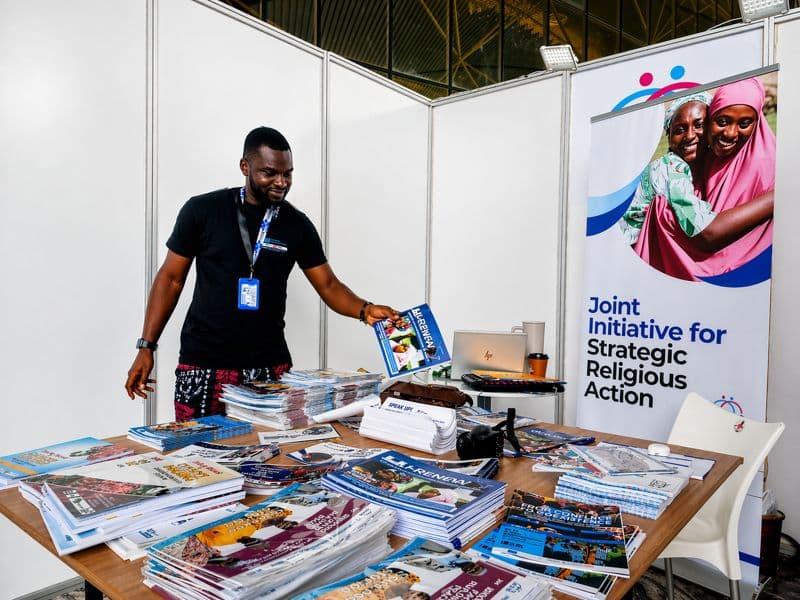
That’s the problem I kept coming back to while developing the communications strategy for Search for Common Ground Nigeria, the world’s largest dedicated peacebuilding organisation. The question wasn’t just what to communicate. It was: how do we build a plan that people will actually follow?
The Real Challenge: Visibility Across Channels and Stakeholders
Working with a mission-driven organisation like Search for Common Ground means the stakes are high. The work matters. But great work that goes unseen doesn’t move people, attract partners, or sustain funding.
So I kept asking myself one question:
How do we make the organisation more visible across channels and stakeholders, and move from big ideas to a simple, workable, clear, practical, follow-and-do plan?
That question became the compass.
What I Did Differently
Instead of adding more, I simplified.
I reviewed what was working and removed everything that created confusion. I traded comprehensiveness for clarity, because a plan that confuses people is a plan that gets ignored.
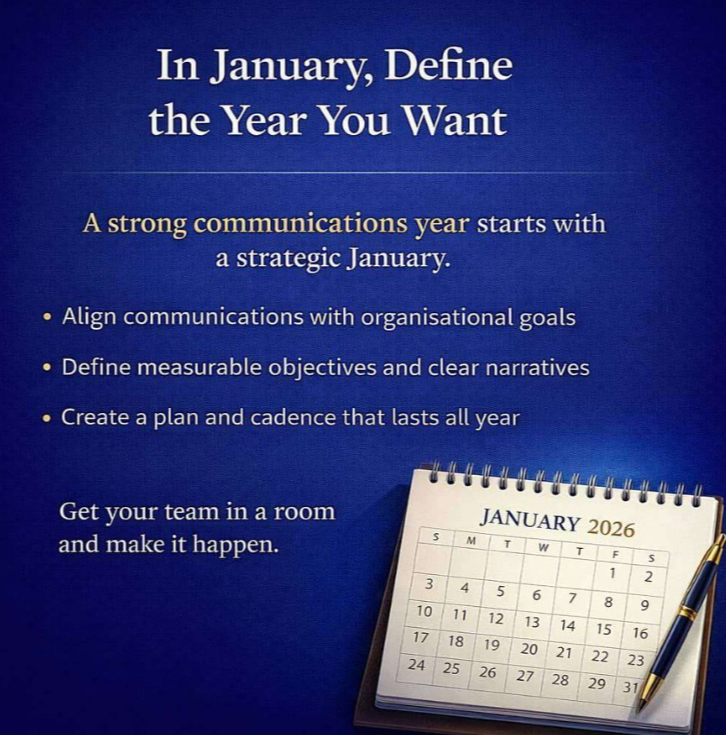
The result is the January Communications Planning Framework for 2026, a tool built not for filing away, but for rolling up your sleeves.
What the Framework Helps You Do
Here’s what this framework is designed to deliver:
Align communications with organisational priorities, so every message ladders up to what actually matters to your leadership and stakeholders.
Focus on what truly matters, cutting through the noise to identify the channels, audiences, and moments that deserve your energy.
Reduce reactive, last-minute work by building intentional rhythms and content calendars instead of scrambling week to week.
Treat communications as a strategic function, not a support service, not an afterthought, but a core driver of organisational impact.
Why January Matters More Than You Think
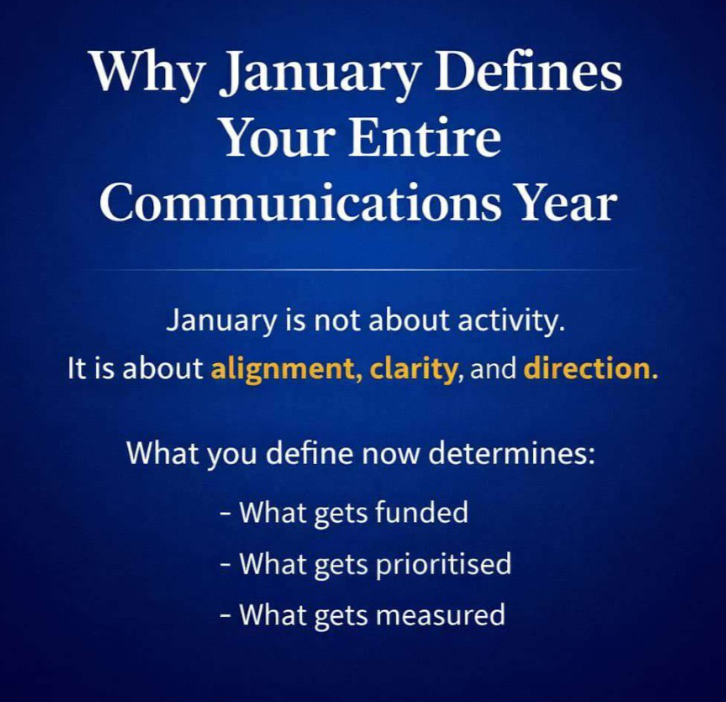
January doesn’t just start the calendar; it sets the tone. The decisions you make (or don’t make) in the first few weeks shape how the rest of your year unfolds. Teams that plan in January tend to communicate with more consistency, confidence, and impact by Q3.
That’s why I shared this framework with my network of communications and advocacy professionals, and the response was immediate. The post resonated deeply with professionals working across NGOs, advocacy organisations, and corporate communications teams, many of whom noted that this kind of practical, no-jargon clarity is exactly what the field needs more of. You can see the original conversation and community response on LinkedIn here.
The Core Insight: Clarity Over Noise
Strong communications don’t start with more content, more channels, or more tools.
They start with clarity.
Clarity about your audience. Clarity about your goals. Clarity about what success looks like, and what it doesn’t. When you build from that foundation, the rest of the plan writes itself.
Take This Into Your Team
If you’re preparing your communications strategy for 2026, here’s my challenge to you:
- Start with a review: What worked in 2025? What created confusion? Be honest.
- Cut before you add. Fewer, better-defined priorities beat long lists every time.
- Make it followable. If your team can’t open the plan and know exactly what to do next week, simplify it further.
- Set the tone in January. Use this month as your foundation, not a warm-up.
Save this post to plan with your team. Share it with someone who is still figuring out their 2026 approach. And if you want to explore the full framework, join the conversation that’s already happening. See the original LinkedIn post here.
Strong communications start with clarity, not noise.
Nelson Asoh has 15+ years of experience in NGO and INGO communications, working with programmes funded by UNICEF, the EU, USAID, IOM and the Dutch Embassy. Visit nelsonasoh.com.ng or take the free Communications Health Check.