
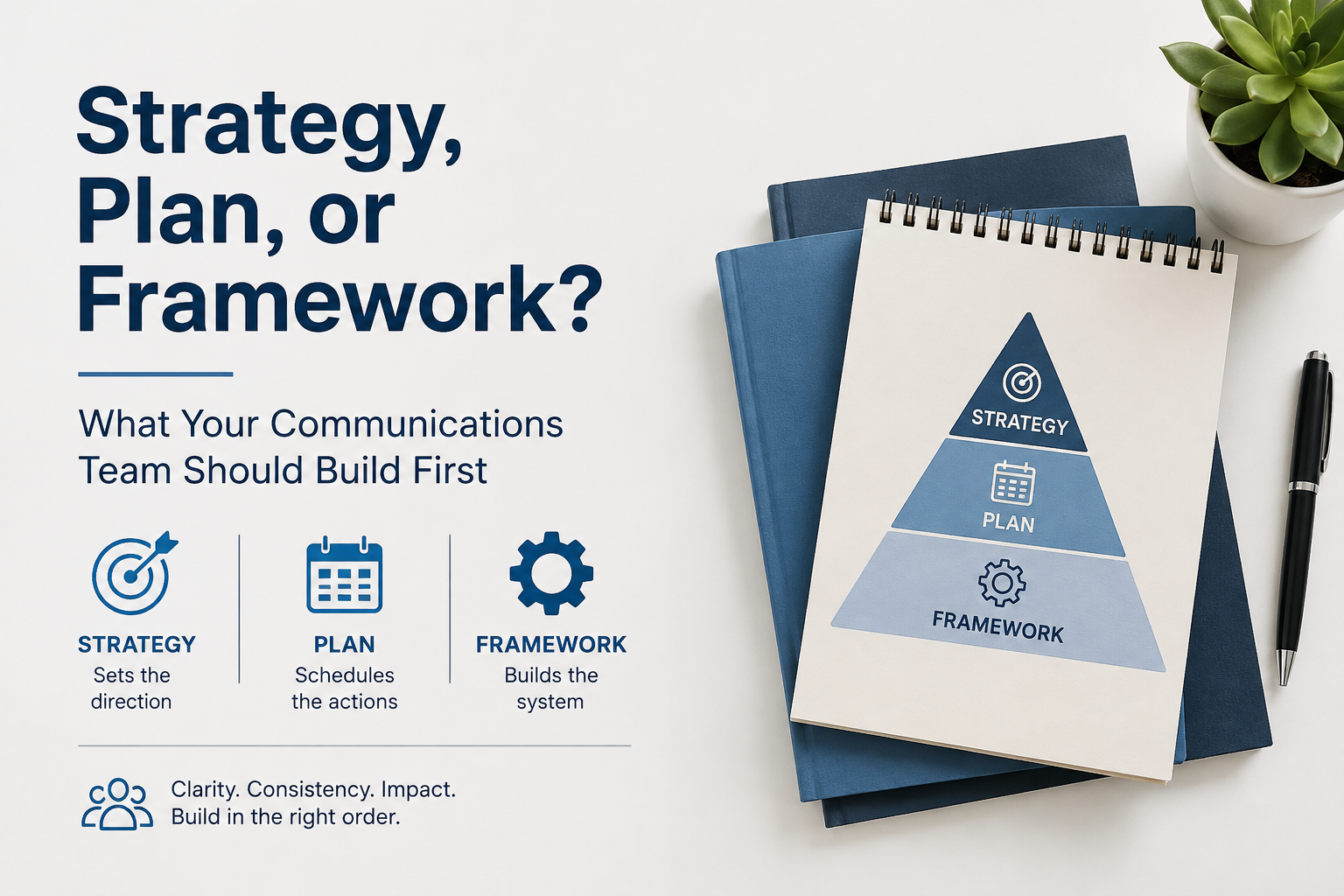
Communication Strategy, Plan, or Framework: What Is the Difference and Why Your Team Needs a Framework First
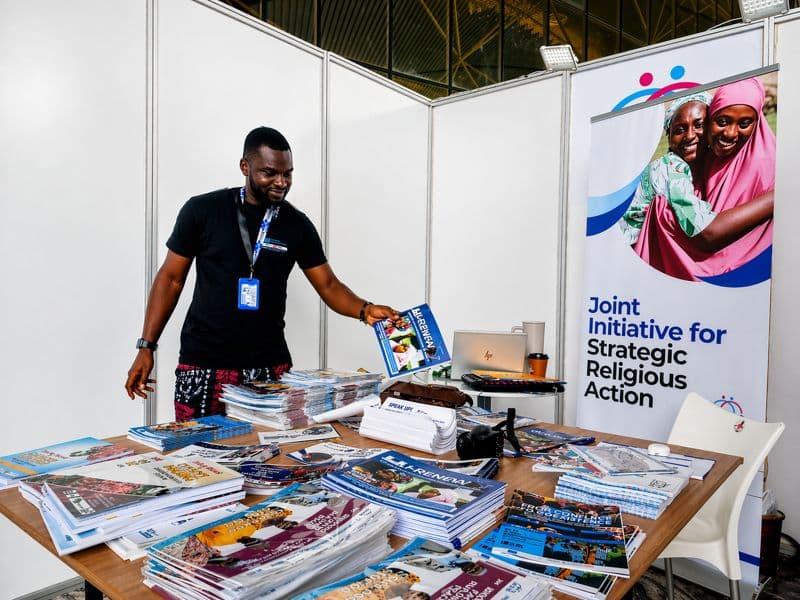
Most communications teams are busy.
They produce content, write reports, manage social media and respond to programme requests.
But ask, “Do you have a communications framework?” and you often hear one of three answers:
“Yes, we have a strategy.” Then you see a list of quarterly activities.
“Yes, we have a plan.” Then you see a content calendar.
“We are working on one.” Which often means the team is operating on instinct.
This confusion matters. Strategy, plan and framework serve different purposes. When they are mixed up, communications teams can work hard without building consistent impact.
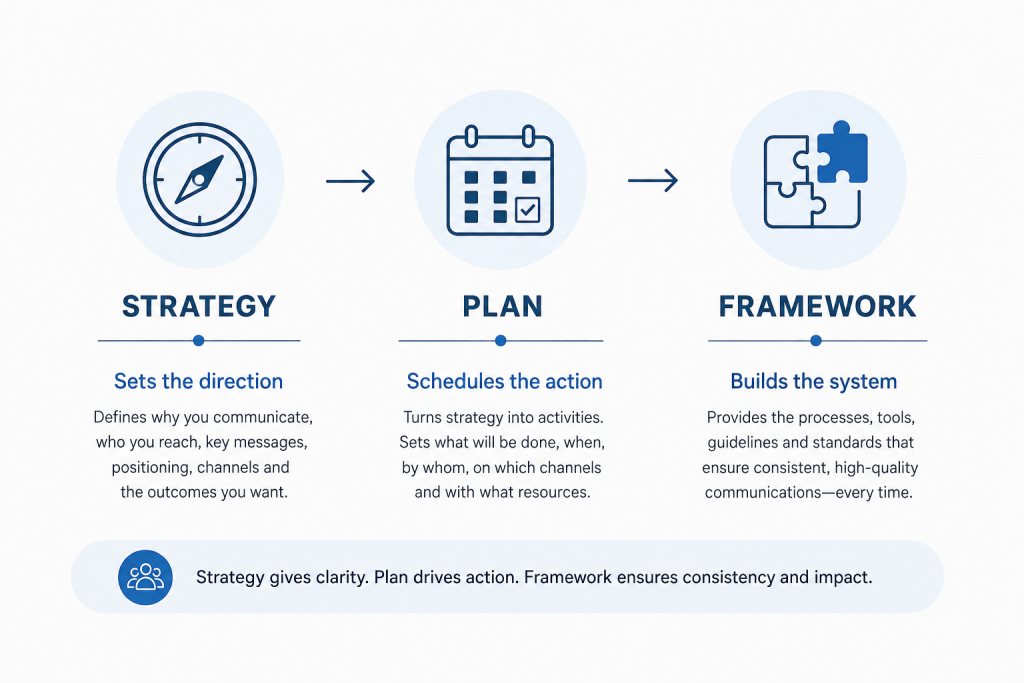
Strategy sets the direction
A communication strategy answers: Why are we communicating, and who are we trying to reach?
It defines the organisation’s communication purpose, audiences, key messages, positioning, channels, tone and success measures.
A good strategy does not tell you what to post on Tuesday. It defines what you stand for, who you need to reach and what you want those audiences to think, feel or do.
Think of strategy as the compass. It sets the direction.
A plan turns strategy into action
A communication plan answers: What will we do, when, and who is responsible?
It translates strategy into activities. It may include content calendars, publication schedules, responsibilities, approval processes, deadlines, campaign activities and donor milestones.
A plan keeps the team organised and accountable.
But a plan without a strategy is simply a list of tasks. You can execute it perfectly and still communicate the wrong message to the wrong audience at the wrong time.
A framework builds the system
A communication framework answers a different question: How do we consistently produce communications that support our goals, regardless of who is doing the work?
The framework is the system that connects strategy and planning.
It can include:
- Story collection processes
- Content review and approval workflows
- Donor visibility checklists
- Ethical storytelling and consent guidance
- Crisis communication protocols
- Brand and tone of voice guidelines
- Reporting templates
- Channel-specific content briefs
- Monitoring and learning processes
The most important feature of a framework is that it is repeatable.
It should not depend on one person’s memory, relationships or experience. It should work when the communications lead is on leave, when a new programme starts, when a crisis happens or when team members change.
Why NGO teams often get this wrong
Many teams start with the plan. They create a calendar, assign responsibilities and begin producing content.
It works until something changes.
A staff member leaves. A crisis happens. A donor asks for new materials. The programme changes direction.
Suddenly, the plan starts to fall apart because the system behind it was never documented.
The problem was not a lack of effort. The problem was the absence of a framework.
Build the system before scaling the activity
If you are building or rebuilding a communications function, I recommend starting with the framework.
This may sound counterintuitive because strategy normally comes first. But NGO communications teams rarely start with a blank page. They inherit programmes, donor requirements, brand rules, existing processes and limited capacity.
Documenting the current system first helps you see what actually works, where the gaps are and what risks need attention.
Start by mapping how a story moves from the field to publication.
Who collects it?
Who reviews it?
Who approves it?
What consent is required?
What donor visibility requirements apply?
What happens when there is a sensitive issue or crisis?
Once these processes are clear, you can identify what needs to be formalised, standardised or improved.
Then your strategy can be built around reality, not aspiration.
And once the strategy is clear, the plan becomes much easier to develop.
The framework is organisational memory
There is another reason frameworks matter: staff turnover.
When a strong communications professional leaves, they often take valuable institutional knowledge with them. Without documented processes, the next person may have to start again.
A good framework protects that knowledge.
It helps new team members understand how communications work, maintain quality, meet donor and ethical requirements, and build on what already exists.
That makes the organisation more resilient.
The bottom line
Sustainable communications is not about having the longest strategy document or the busiest content calendar.
It is about having a system that works consistently.
Strategy sets the direction.
The plan schedules the action.
The framework builds the system that holds everything together.
If your communications team is constantly reacting to requests, deadlines and crises, the answer may not be another content calendar.
You may need to build the system underneath it.
Nelson Asoh has 15+ years of experience in NGO and INGO communications, working with programmes funded by UNICEF, the EU, USAID, IOM and the Dutch Embassy. Visit nelsonasoh.com.ng or take the free Communications Health Check.